
What Time Ibiza Actually Eats in August
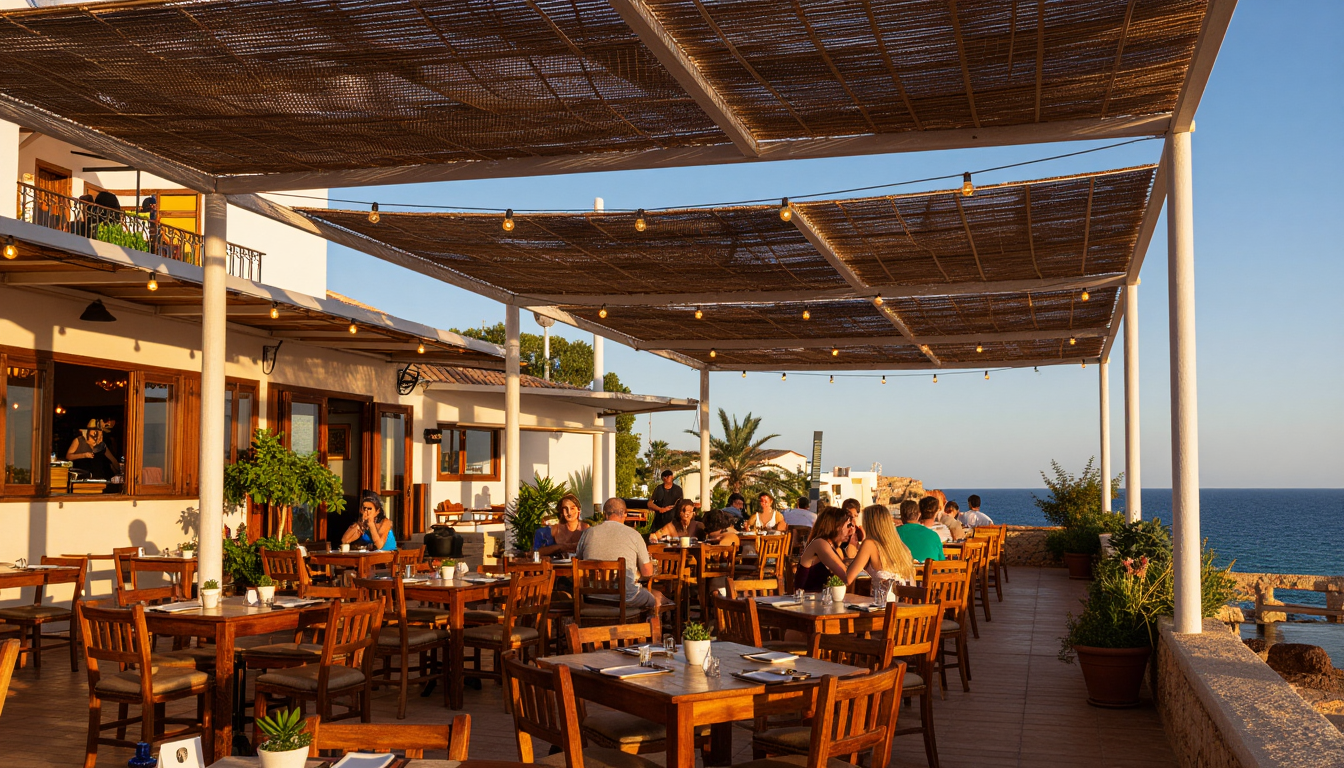
In August, lunch on Ibiza is served from roughly two to four in the afternoon, and dinner does not really begin until nine. Ibiza's meal times run about two hours later than most visitors plan for, and that gap is what spoils the first evening. A visitor who sits down at seven will be the first table, and quite possibly the only one for the next ninety minutes, served by a waiter who has not finished setting up. From that empty terrace it is easy to conclude that the restaurant is failing, that the island is overrated, or that everyone must be somewhere more expensive. None of that is true. The visitor's clock is simply running two hours ahead of the island's.
The shape of a summer day
Breakfast here is small and early or small and late, but it is always small: a coffee and a toasted half-baguette with tomato and oil, or an ensaimada if someone is being indulgent. Nobody is building a foundation for the day, because the day's real meal is still six hours away.
The morning is when the island gets things done. Markets, deliveries, boat departures, hikes, the school-holiday chaos of getting children to a beach before the parking fills. By eleven there is a second small hunger and a second coffee, often with a bocadillo standing at a bar. By one, the heat has arrived properly and outdoor plans start to feel like a mistake.
That is also when village life shuts down. Shops in Sant Josep, Santa Gertrudis or Sant Joan close between two and five, sometimes later. It is not a quaint tradition kept for tourists; it is what happens when the shaded side of the street is thirty-two degrees.
What time is lunch? Two, and the kitchen closes at four
The menú del día — three courses, bread, a drink, on weekdays — is served from about half past one to four, with kitchens taking their last orders somewhere between half past three and four. Arriving at half past twelve gets a closed door. Arriving at quarter to four often gets a shrug and whatever is left.
Lunch is also long. A rice dish ordered for the whole table takes forty minutes before it appears, and nobody treats that as a delay. Afterwards comes the sobremesa, the hour of coffee, hierbas and conversation that follows the plates being cleared, which is the part that most surprises visitors used to a table being turned in fifty minutes. On Sundays the whole thing can run from three until the light starts to go.
Two of the better food experiences on the island are built around exactly this rhythm rather than fighting it. A morning walk up to the Sa Capella chapel followed by an unhurried lunch, the way island families actually spend a Sunday, lands at the table at the right hour. So does a cooking class where paella and bullit de peix are made in two stages — the fish first, the rice cooked afterwards in its broth — because bullit is a dish that was never designed to be eaten quickly at seven in the evening.
The long, empty afternoon
Between four and eight, nothing happens indoors. Kitchens are closed between services, staff are asleep or smoking behind the building, and the village restaurant that looked charming at lunchtime has its shutters down. In the tourist strips, the places that do serve continuously through the afternoon are usually announcing, without meaning to, who their customers are.
This is the dead stretch, and it is genuinely hot: the peak is around five, not midday. The sensible use of it is water, shade or a dark room. It is also the worst time to drive anywhere, because everyone who went to a beach at ten is now trying to leave one.
Beach kitchens stop earlier than expected
The most common August disappointment is arriving at a remote cove at half past six, ready for an early dinner, and finding a bar that will pour a beer but has stopped cooking. Small chiringuitos at the harder-to-reach coves often take their last food order somewhere between half past five and seven, and several close entirely at sundown; the ones inside the Ses Salines natural park work under stricter hours than a restaurant in town. A full beach restaurant with a proper licence, by contrast, will happily serve until eleven.
The fix takes ten seconds: ask what time the kitchen closes when ordering the first drink at midday. Or skip the table altogether — a laid-out picnic on the rocks at Cala Comte sidesteps the question, since the food arrives when the sun is going down rather than whenever a kitchen decides it is done.
What time is dinner? Nine, when the heat breaks
Restaurants open their doors at half past seven or eight and fill at nine. By ten, a good place in Ibiza Town or Santa Eulària is at capacity, children included, and last orders fall around eleven or half past eleven — later in the port, where the kitchens follow the nightlife. Nine to half past nine is the honest booking. Anything earlier buys an empty room, food from a kitchen still finding its rhythm, and a table in the last of the day's heat.
Eating in stages works better than one long sit-down when the evening is warm. A tapas route through the old town, moving between three or four bars, matches how people here actually eat in August: small plates, standing up, walking between them while the streets cool.
Book ahead, and take the late slot
August is the month when a table has to be arranged days in advance, and the sea-view terraces are spoken for weeks ahead. Deposits and card guarantees are now normal, a direct response to how often people book three restaurants and show up at one. Confirm on the day. And settle how the return trip works before sitting down, because a taxi at half past midnight in August is a genuine problem, not a formality.
The slot still available when everything else is gone is usually the late one — and it is the better one anyway. In early August the sun sets around ten past nine, by the end of the month closer to half past eight. The sunset crowd books the early sitting, stands up within fifteen minutes of the sun touching the water, and is gone by half past nine. What is left is a terrace that has cooled, a breeze off the sea, a kitchen no longer under pressure, and the front-row table that was sold at a premium an hour earlier. The trade-offs are real: near the salt flats and the wetlands the mosquitoes arrive with the dark, the fish special may already be finished, and on the north coast the breeze that makes the hour pleasant will have a jumper coming out by eleven. It is still the best table of the day.