
Ibiza has not held a guide exam since 2017. You can still guide here legally
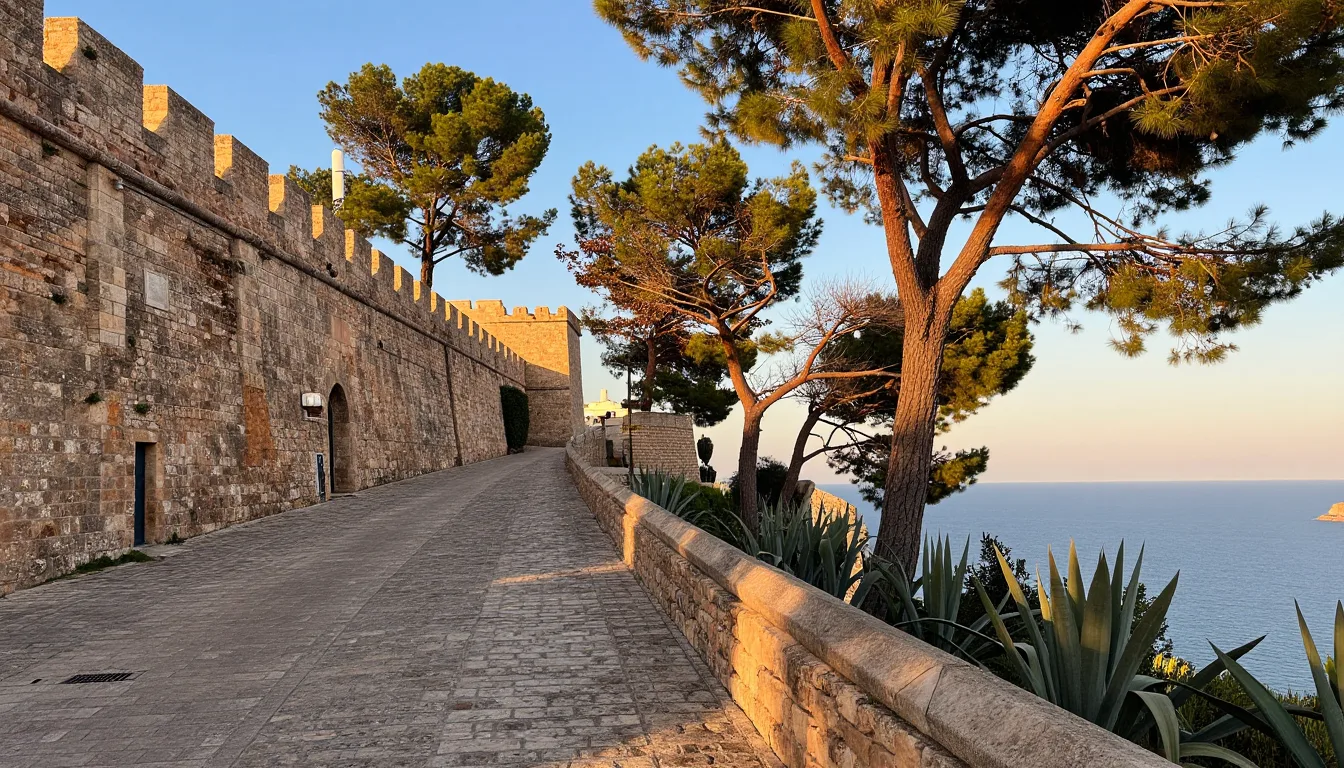
If you want to work as a tour guide in Ibiza, you need to understand how regional regulations operate on the ground. Under Balearic tourism law, providing commentary or historical interpretation to groups at cultural sites—such as Dalt Vila, historic churches, and museums—or within protected natural reserves like ses Salines requires an official tourist guide licence. By law, the island council, the Consell d'Eivissa, is required to hold qualifying examinations every year. In reality, Ibiza has not held an exam since January 2017 (which was announced in late 2016), and no official examination call is open. Despite this administrative standstill, you can still guide here legally. Three legal pathways allow you to operate without waiting for a local exam.
Where do you need a licensed guide, and where not?
The 2015 decree developing the Balearic tourism law sets strict boundaries on where accredited guides are mandatory. You must hold an official Balearic tourist guide licence when providing information or historical commentary to organized groups visiting registered Cultural Heritage sites (Bienes de Interés Cultural) or protected natural areas. This includes Dalt Vila—Ibiza's historic fortified town and UNESCO World Heritage site—alongside ancient archaeological sites, churches, monasteries, and the entire ses Salines Natural Park.
The law mandates one licensed guide per group of up to 70 people or per vehicle. However, the regulation establishes five specific exemptions. The most important exception covers registered active tourism companies conducting their own outdoor itineraries, as well as basic passenger assistance or transfer services that do not include cultural interpretation.
Requirements for obtaining official qualification in the Balearics
To gain official accreditation directly from the Balearic Islands, applicants must meet six core criteria:
- Possess Spanish, EU, or EEA nationality, or hold valid Spanish legal residence with full work authorization.
- Be at least 18 years of age.
- Hold a higher vocational degree, university degree, or an official professional certificate in tour guiding.
- Demonstrate proficiency in both Spanish and Catalan.
- Prove fluency in English and at least one additional foreign language.
- Prove knowledge of the natural and cultural heritage of the Balearic Islands, either in the tests or through a qualifying tourism degree.
For professionals holding official tourism degrees (such as a Degree in Tourism or a Higher Technical Degree in Tourist Guide and Assistance), there is a direct pathway without taking the local exam. If you completed your qualification at an official educational institution in the Balearic Islands, you can apply for your licence directly upon submission of your documentation. If you studied outside the Balearics, your degree curriculum must cover regional heritage, and you must prove Catalan language proficiency at B2 level or higher unless at least 50 per cent of your coursework was conducted in Catalan. Once granted, Balearic guide licences are indefinite and do not expire. The public island register lists 247 entries, which correspond to roughly 240 distinct guides because some appear twice; it does not say whether each licence is still in force.
Why the local exam has not been called
Although regional decree obliges each island administration to organize qualifying tests annually, execution across the archipelago is inconsistent. The Consell de Mallorca recently ended a twenty-year hiatus by holding examinations in May 2026 for 19 registered candidates, but that process was strictly restricted to Mallorca.
In Ibiza, the last public examination notice was published in November 2016, with exams held in January 2017—an event described at the time as the first in fifteen years. The exam fee itself is nominal, but the real cost lies in securing official language certifications and studying local history. With no call open, waiting for the island council to schedule a test is not a practical plan for anyone who wants to work this coming season.
The three legal ways to work as a tour guide in Ibiza
You do not need to wait for local authorities to publish an exam notice to launch your activity. There are three legitimate pathways that allow you to guide legally in Ibiza today:
- Cross-border recognition from another Spanish region: If you are legally established as a tourist guide in any other Spanish region, the 2015 Balearic decree lets you work freely in Ibiza without obtaining the Balearic licence, as long as you meet your home region's requirements. The authorities can check that through administrative cooperation and ask for your professional details. Two caveats: the exemption covers only the guide licence, not self-employed registration or the other tourism obligations, and your licence's validity is whatever your home region sets, not the Balearic indefinite rule.
- Direct qualification through tourism degrees: If you hold a recognized university degree or vocational diploma in tourism, information, or guiding, you can apply directly for official recognition without taking an exam, provided you meet the required language standards.
- Operating through an active tourism business: If your experiences focus on nature, sport, and outdoor recreation—such as coastal hiking, sea kayaking, or stand-up paddleboarding—you can operate under a registered active tourism company. Active tourism staff do not require a tourist guide licence to lead their own activities. However, this exemption does not allow you to give guided cultural commentary inside protected heritage sites like Dalt Vila or historical museums.
If you plan to lead walking tours or outdoor excursions, exploring established offerings in categories like sightseeing and art and culture will give you a clear view of how existing operators structure their itineraries. Outdoor leaders frequently offer active coastal outings such as a sea kayak and snorkel cave adventure for 48 € or a paddle surf session in Sant Antoni for 55 €, both operating within active tourism regulations when properly registered. You can review additional sports activities under sports or outdoor routes under adventure.
What happens if you guide without a licence?
Guiding groups inside protected cultural heritage sites or natural parks without required credentials—or operating an agency using unlicenced personnel—is classified as a serious administrative infraction under Balearic tourism law. Fines range from 5,001 € to 50,000 € per violation, applying to both independent individuals and the companies hiring them.
If a firm sanction for another serious offence was imposed in the previous twelve months, the new one is reclassified as a very serious infraction, carrying fines between 50,001 € and 500,000 €, alongside a potential temporary ban from professional practice. Enforcement on the ground has expanded: the number of active tourism inspectors operating in Ibiza increased from five to nine in 2026, backed by a regional plan adding 35 new enforcement officers funded by the sustainable tourism tax.
Employed work: what the Balearic hospitality collective agreement 2026 pays
If you choose seasonal work in Ibiza for an established employer—whether as an activity host, sports monitor, or hotel representative—your compensation will be defined by the official regional framework. The Balearic hospitality collective agreement 2026 (valid from 1 April 2026 to 31 March 2027) sets standardized monthly base salaries across 14 annual payments, plus a mandatory monthly transport allowance of 141.34 €.
For Level IV staff (animators, activity monitors, waiters), gross monthly base pay varies across establishment categories A, B, and C:
- Category A: 1,852.57 €
- Category B: 1,813.00 €
- Category C: 1,794.13 €
Note that night clubs and discotheques are classed under Category C. For Level III positions requiring specialized languages (such as receptionists or public relations staff), monthly base rates range between 1,928.12 € and 1,994.19 €.
A standard seven-month full-time contract for a Level IV monitor at a Category A establishment yields approximately 16,119 € gross, including base pay, prorated extra payments, and transport allowances. After standard employee social security contributions (6.50 per cent) and basic income tax withholdings for a single employee without dependants, net take-home pay stands at roughly 14,970 € for the full season.
Accommodation is the real bottleneck
Earning a standard seasonal income is achievable; securing housing is the actual hurdle. During the 2026 season, property owners in Ibiza Town asked up to 1,700 € per month for a double room with an en-suite bathroom on seasonal leases running from April to October. Seasonal worker channels on Telegram and Facebook report very few private rooms listed under 1,000 € per month, though listings outside major urban centres still appear from approximately 750 € per month.
A realistic seasonal budget highlights the impact: out of a 14,970 € net seasonal earnings, paying 1,000 € monthly rent over seven months takes 7,000 €, leaving 7,970 € to cover food, transport, and personal expenses.
Attempting to avoid rent by living in a camper van or converted vehicle carries severe financial penalties. Legislation enacted in November 2024 strictly prohibits overnight stays and camping in motor vehicles on rural land across Ibiza outside official campsites. It also bans parking for more than three days in the same spot outside designated public car parks. Violations are treated as very serious offences, attracting fines between 10,001 € and 30,000 €, along with potential vehicle impoundment for two to four months.
When and where companies recruit
Ibiza recorded 3,391,836 tourist arrivals in 2025, with nearly 89 per cent arriving between May and October. The seasonal fluctuation is massive: Ibiza Airport registered 1,481,444 passengers in August 2025 compared to 235,942 in December, and just 199,053 in January 2026—a peak-to-trough difference of over seven to one.
Major employers finish their hiring early. The island's primary employment fairs take place in March and require online pre-registration in February to secure interview time slots:
- Activa't Portmany: Held in Sant Antoni on 6 March 2026, featuring 58 companies and over 900 open positions.
- Santa Eulària se n'Ocupa: Held on 12–13 March 2026, bringing together nearly 80 businesses offering over 1,800 vacancies.
Arriving in May with printed resumes without prior interview appointments or confirmed housing dramatically increases the risk of an unsuccessful season.
Setting up your season
Working in Ibiza during the summer season requires careful planning regarding legal status, expenses, and housing. If you hold valid credentials from another Spanish region, possess a qualifying tourism degree, or organize registered active outdoor activities, you do not need to wait for an official local exam that has not taken place since 2017.
If you plan to design and run your own independent activity or outdoor tour, ensure you follow all administrative steps outlined in our guide on how to charge for an experience in Ibiza and handle the paperwork. Once your business registration and active tourism filings are complete, you can list your tour directly on Journi by visiting add your experience to connect with travellers across the island.