
Ibiza's North Coves: Pebbles, Pine Shade and Very Small Car Parks
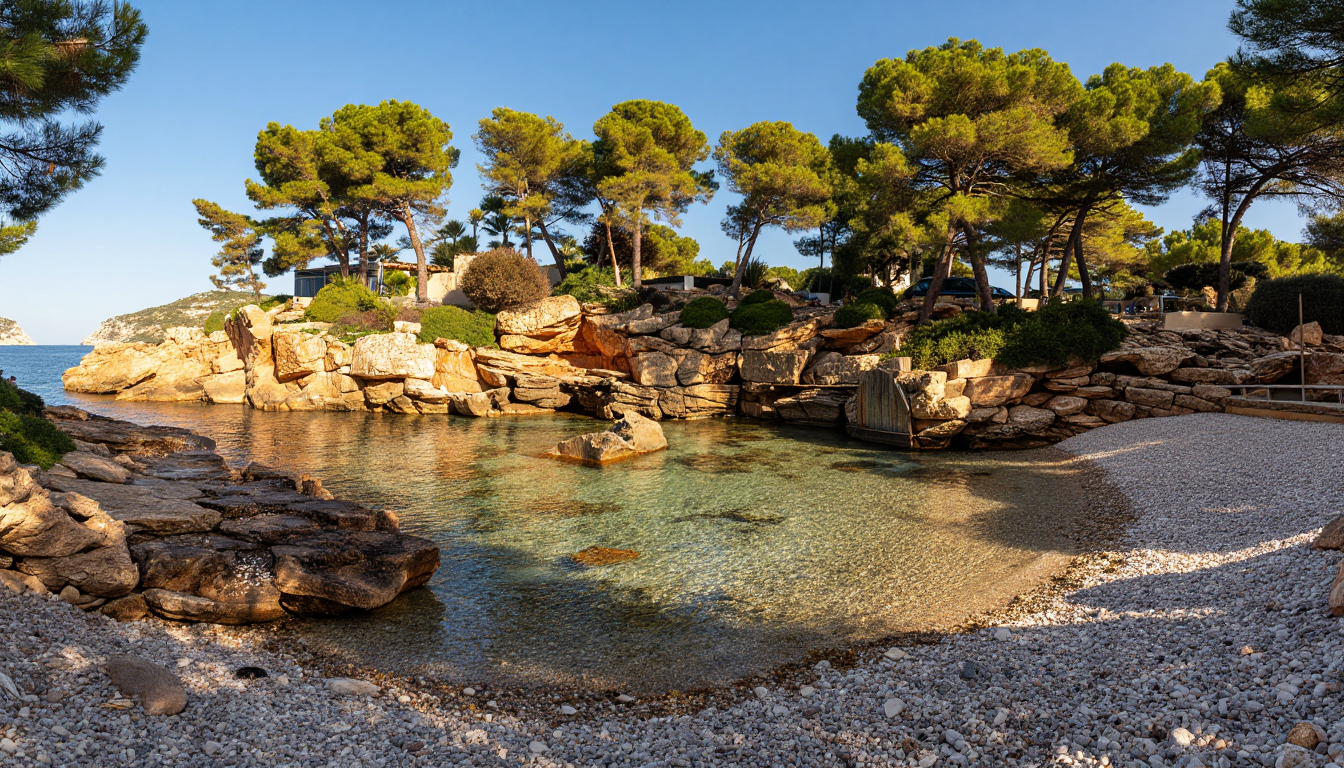
The clearest water on Ibiza is in the north, and the reason is unglamorous: there is almost nothing built behind it. The municipality of Sant Joan de Labritja takes in most of the island's northern third and holds a small fraction of the beds you find around Sant Antoni or Platja d'en Bossa, so its coves sit at the bottom of pine slopes instead of at the foot of an apartment block. Benirràs, Cala Xarraca, Cala d'en Serra, Portinatx and the handful of smaller inlets between them are roughly what Ibiza looked like before the airport got busy. The trade is comfort. Most are pebbles rather than sand, the car parks hold thirty or forty cars, and several have no toilet, no shower and no shade after midday. Arrive early and none of that matters much. Turn up at two in the afternoon in August and it matters a lot.
Where the north actually begins
The change happens a few minutes past Sant Joan. The road up from Ibiza Town runs through farmland and then climbs into Es Amunts, the band of low wooded hills that covers this end of the island and is protected as a natural area. The soil turns red, the pines come down to the cliff edge, and the villages shrink to a church, a bar and not much else. Portinatx is about thirty-five minutes from Ibiza Town outside July and August, closer to an hour inside them. What the map does not tell you is that the last kilometre to most of these coves is a single lane with passing places, and to two of them it is unsurfaced. Worth reading your rental agreement before you commit: many exclude damage caused on unpaved tracks, and the descent to Cala d'en Serra is exactly the kind they have in mind.
Benirràs, and what fame costs
Benirràs is the famous one, thanks to Cap Bernat — the pointed rock offshore that everyone photographs — and the Sunday drum circle that has been going since the seventies. Both are real, and both are why the beach is not quiet. The shore itself is coarse pebble under a thin skim of sand: hot at midday, awkward barefoot, and the bottom shelves away fast, so it is not the easiest cove for small children. There are three beach bars. The access road is single track with cars parked along it plus a paid area at the bottom; in high summer it fills by around eleven, and on a Sunday the crawl back up after sunset can take three quarters of an hour. One thing nobody mentions: from June to early August the sun drops behind the western headland rather than into open sea, so what you get is a long gold hour on the rock rather than a sunset over water. If the drumming is the point of the trip, the organised Benirràs sunset drum circle gathering at least takes the parking and the timing off your hands.
Cala Xarraca and Cala Xuclar, straight off the main road
Xarraca is the easiest cove up here to reach — you can see it from the road to Portinatx, and the parking is a dirt pull-in above the beach. Grey pebbles, a restaurant built onto the rocks, and water that is startlingly clear because the bottom is stone and seagrass rather than churned sand. At the northern end there is a seam of natural clay that people dig out and paint themselves with; harmless, and it rinses off. The snorkelling along both flanks is the real argument for coming. The downsides are that it is small, you can hear the road, and it is full by late morning. Five minutes further on, Cala Xuclar is a slot of shingle with fishermen's huts, a wooden bar in season and space for maybe fifteen cars. If you would rather someone else found the good water, a guided swim and snorkel round the crystal coves covers more ground than you can from one car park.
The coves that cost you something
Cala d'en Serra, Es Portitxol and Port de ses Caletes all ask for effort. Cala d'en Serra is reached by a rough unsurfaced track off the Portinatx road and then a short walk down, past the concrete skeleton of a hotel that was designed in the sixties and never finished — one of the odder sights on the island. Small horseshoe, sand and pebble, a wooden kiosk that opens when it feels like it. Es Portitxol, on the Sant Vicent side, is a twenty to thirty minute walk down a stony path; the climb back in afternoon heat is the part people forget to budget for. Port de ses Caletes is a run of hairpins down to a shingle beach with boathouses, no services of any kind and, most days, hardly anyone. For all three: carry water, expect patchy phone signal, put something on your feet and do not count on shade. They make more sense from the water than from land, which is the appeal of a paddle-surf safari along the wild north coast.
Portinatx, when you want a shower and a parasol
Portinatx is the exception at the top of the island: a small resort with three sandy beaches, plus toilets, showers, sun loungers, a dive school and enough parking that arriving at midday is survivable. It is the sensible choice with young children, or with anyone who will not enjoy an hour on hot stones. The water is the same northern water, but the beaches are small and in August they fill from the hotels behind them as much as from the car park, so arriving early still pays. In exchange for the comfort you get buildings, a row of restaurants and none of the emptiness that brought you north in the first place — though it is also the one place up here where the day can end without getting back in the car.
Timing, wind and the practical bit
Two rules cover most of it. Arrive before half past ten or after five, and check the wind before you drive. When the tramuntana blows from the north this whole coast goes choppy, cold and cloudy underwater within a couple of hours, and that is the day to head west instead. Beyond that: water shoes, some cash in case a card machine is having a moment, and a full tank, because petrol stations up here shut early. May, June, September and early October give you the same water with a third of the cars. And if the cove you wanted is full, the inland fallback is genuinely good — the white villages and viewpoints of the north are ten minutes away and nobody has to park at Benirràs to see them.