
Protecting Ibiza's Wildlife: Why Road Safety Matters
Careful driving is a fundamental part of experiencing Ibiza responsibly, especially when it comes to preserving the island's unique wildlife. Recent incidents, such as the finding of a genetta after being hit by a vehicle in es Rafal Trobat, Sant Jordi, highlight the ongoing presence of species once thought to be nearly gone. These events serve as a direct reminder that our daily movements on the roads have a tangible impact on Ibiza's natural heritage. Understanding and respecting the island's fauna, particularly its more vulnerable nocturnal inhabitants like the genetta, is essential for any traveler seeking a meaningful and respectful visit. The return of the Ibizan genetta underscores the island's ecological resilience and the importance of our collective efforts to protect it.
Understanding Ibiza's Endemic Genetta
The genetta, scientifically known as Genetta genetta isabelae, is more than just another animal; it's an endemic subspecies unique to Ibiza. The Ministry for Ecological Transition recognizes it as the most distinct of the genetta subspecies found in Spain. This small carnivorous mammal, characterized by its elongated body, spotted fur, and a distinctive tail adorned with dark rings, is primarily nocturnal. This habit makes it particularly vulnerable to traffic, as it often crosses roads during hours of reduced visibility.
Its preferred habitats are varied, encompassing pine forests, areas of Mediterranean scrub, rocky terrains, and agricultural zones that retain sufficient vegetative cover. This adaptability allows it to thrive across diverse landscapes found throughout the island, from the quieter north to the more populated central areas. The genetta's diet is equally diverse, consisting of rodents, small birds, reptiles, amphibians, invertebrates, and various fruits. Historically, the Ibizan genetta faced significant pressure, being intensely hunted in the 1940s for its valuable skin. However, its population managed to recover when this pressure diminished, largely because its natural habitat had not undergone irreversible transformation. This recovery story is a testament to the island's ecological capacity and the animal's resilience, provided it is given the space and safety to thrive. Protecting species like the genetta contributes to the overall biodiversity that makes Ibiza such a special place, allowing visitors to glimpse truly wild aspects of the island. To further appreciate Ibiza's natural landscapes, consider exploring guided walks such as Sa Talaia: Ibiza's Highest Point, with Tortilla at the Top, where you can experience the island's diverse ecosystems firsthand.
Where Do Wildlife Incidents Happen?
The recent incident involving the genetta occurred in es Rafal Trobat, an area located north of the nucleus of Sant Jordi de ses Salines, specifically within the vénda de l’Horta. This locale is a prime example of the rural and forestal zones that define much of Ibiza's interior, providing essential habitats for a variety of wild fauna. While this specific event took place in a distinct rural setting, the reality is that such incidents can occur anywhere roads intersect with natural environments across the island. From the quiet country lanes in Sant Joan to the roads carving through wooded areas near Santa Eulària or Sant Josep, the potential for wildlife crossings is ever-present.
Understanding these risk areas isn't just about avoiding specific spots; it's about adopting a mindful approach to driving throughout your visit. Animals, particularly nocturnal ones, do not recognize human-made boundaries. They move between feeding grounds, water sources, and den sites, often crossing roads that fragment their habitats. Therefore, whether you're heading to a secluded beach in the north or navigating routes between villages, it's crucial to be aware. Drive slower, especially during twilight hours and at night, and remain vigilant for any movement near the road's edge. This heightened awareness ensures you contribute positively to the island's ecosystem, rather than inadvertently harming its inhabitants. Exploring the island's quieter corners, such as those found on a North Ibiza: White Villages & Secret Viewpoints tour, often brings you closer to these natural habitats, making responsible driving all the more important.
Practical Steps for Ibiza Road Safety and Wildlife Protection
Contributing to Ibiza's wildlife protection through careful driving is simpler than you might think. Adopting a few key habits behind the wheel can significantly reduce the risk of incidents and ensure you're doing your part to preserve the island's unique animal life.
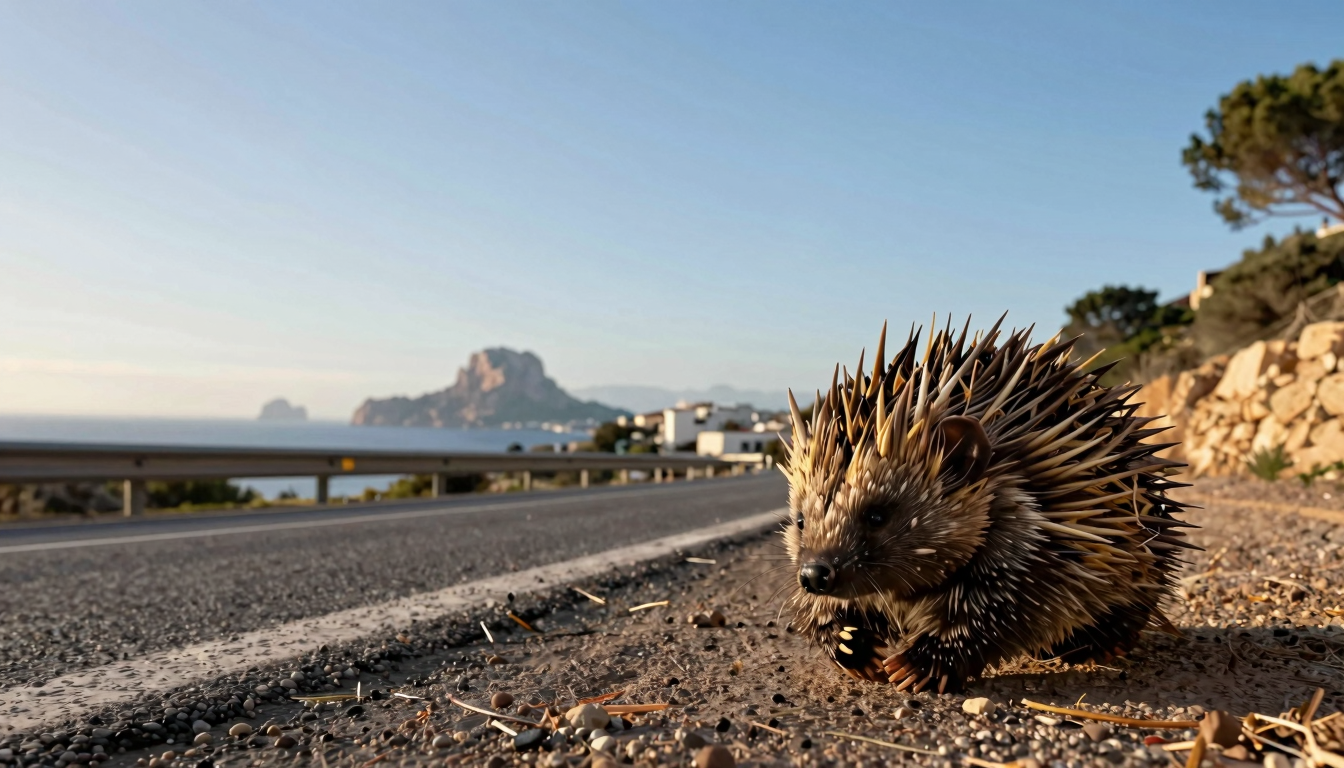
!Hedgehog crossing a road in Ibiza
Here are practical steps to integrate into your driving routine:
- Reduce Your Speed: This is the most crucial step. Animals are unpredictable. Lower speeds give you more time to react, especially at night, dawn, and dusk when many species, like the genetta, are most active and visibility is limited.
- Stay Alert and Scan Ahead: Don't just focus on the car in front of you. Continuously scan the road ahead, the shoulders, and the ditches for any signs of movement. Animals can dart out unexpectedly.
- Heed Wildlife Crossing Signs: These signs are placed in known high-risk areas. Treat them as a clear warning to be extra cautious and reduce your speed significantly.
- Brake Firmly, But Avoid Swerving Violently: If an animal suddenly appears, brake hard and try to stop in a straight line. Swerving aggressively can lead to loss of control, potentially causing a more severe accident involving other vehicles or obstacles.
- Know Who to Contact for Injured Animals: If you unfortunately encounter an injured animal, do not approach it directly, as it may be frightened or dangerous. Instead, contact local authorities such as the Guardia Civil, Policia Local, or environmental agents. While specific contact numbers aren't listed here, a quick search for "servicios de fauna herida Ibiza" will provide the most up-to-date information.
- Consider Alternative Transport for Short Distances: For shorter trips, particularly during daylight hours or in more urbanized areas, think about walking or cycling. This not only reduces your carbon footprint but also minimizes vehicle presence in potential wildlife corridors.
By integrating these practices, you're not just driving safely for yourself, but actively participating in the conservation of Ibiza's precious natural environment. Consider incorporating nature-focused experiences like a Beach Cleanup & Free Snorkel Session into your itinerary to deepen your connection with the island's ecology.
Beyond Driving: Contributing to Ibiza's Natural Heritage
While responsible driving is a critical component of protecting Ibiza's wildlife, your contribution as a visitor can extend even further. The island's unique ecosystem, from its Posidonia meadows – a UNESCO World Heritage site – to its diverse terrestrial fauna, thrives on mindful interaction. Embracing this holistic approach to responsible tourism means appreciating Ibiza not just for its famous nightlife, but also for its rich biodiversity and natural beauty.
Engaging with the island's natural side allows for a deeper connection with the destination. Instead of solely focusing on organized entertainment, seek out opportunities to explore Ibiza's quieter landscapes. Participate in activities that align with ecological preservation, such as guided hikes through nature reserves or birdwatching excursions. These experiences not only offer a different perspective of Ibiza but also inherently encourage a respectful presence. For those looking to immerse themselves in the island's serene side, a Sunrise Yoga & Meditation over Es Vedrà session offers a profound connection with nature, away from the roads. Your mindful choices, whether behind the wheel or during leisure activities, collectively contribute to safeguarding the delicate balance of this Mediterranean gem, ensuring future generations can also marvel at its wild wonders.
Ultimately, a visit to Ibiza is about more than just experiencing its vibrant culture and stunning beaches; it's about becoming a temporary steward of its natural environment. Mindful driving, particularly at night and in rural areas, plays a pivotal role in this stewardship. By being aware of your surroundings and adjusting your habits, you directly help protect species like the recovering Ibizan genetta, ensuring they continue to be a cherished part of the island's unique identity. Your responsible actions make a real difference, contributing to a sustainable and respectful future for Ibiza's exceptional natural heritage.